
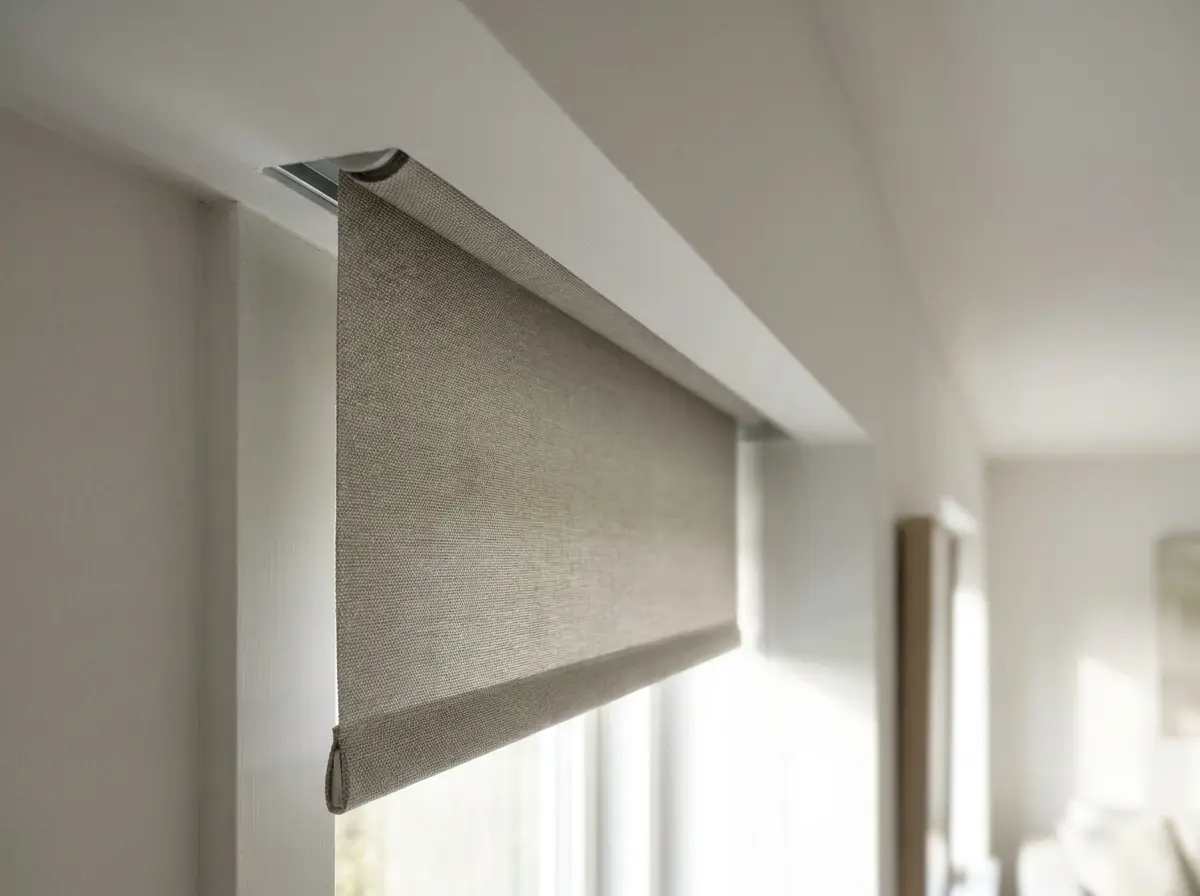
Shading designed into the ceiling, not bolted on after — the finish that suits Southdowns' clean, open-plan detailing.
Blinds built into the building, not onto it
A concealed or recessed blind drops from a slim ceiling slot or bulkhead recess rather than a visible headrail — raise it, and the window shows glass and frame, nothing else. On Southdowns' open-plan double-volume living areas, where the ceiling line is often the most considered part of the room, that clean read matters more than it would on a smaller, busier window.
It works best planned early — the earlier we're in the build or renovation, the more cleanly the recess sits into the ceiling. Retrofit is still possible with a surface bulkhead or a slim cassette pelmet colour-matched to the ceiling, though it won't disappear quite as completely as a recess planned from the drawings.
- Fabric drops from a hidden ceiling slot or bulkhead — no visible headrail
- Best planned into new builds or major renovations, while the ceiling is still open
- Retrofit possible with a slim, colour-matched surface cassette
- Almost always motorised — reaching into a ceiling slot by hand defeats the point
- Coordinated with downlights, aircon slots and curtain pelmets at design stage
What a concealed system costs
This is as much a ceiling detail as a blind, and the guide reflects it: R1,600 to R3,000 per square metre installed hand-operated, and R3,200 to R5,000 motorised, which is how nearly all of them are specified. A ceiling already framed with a pocket sits at the modest end of those bands; a surface bulkhead formed after the fact sits at the dearer end.
Two costs fall outside that rate, and better to hear it now. The building work that creates the recess belongs to whoever is doing the ceiling, and the power point a wired motor needs at the head of the opening belongs to the electrician. Small openings attract a minimum. If the house is still on the drawings, book the free measure before the ceilings close — the same detail costs less designed in than cut in.
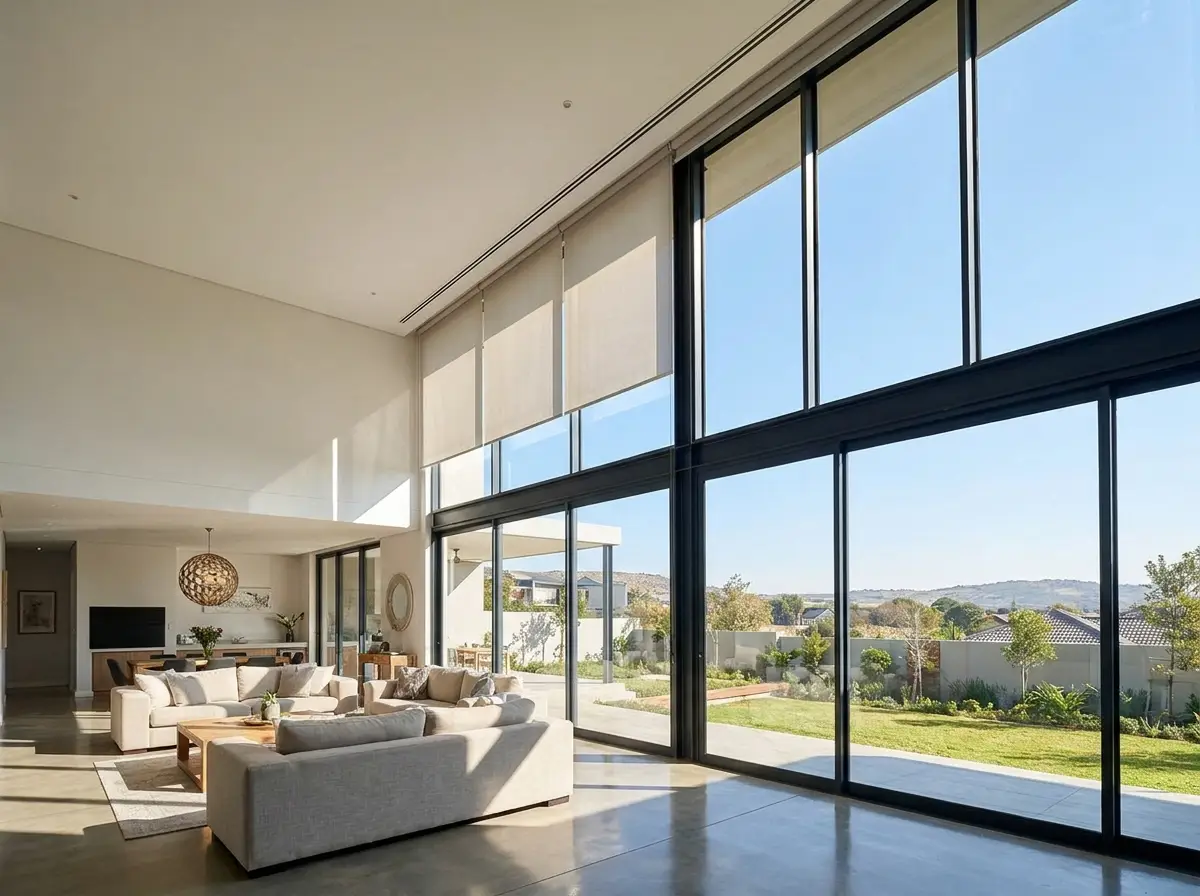
The clean ceiling line, kept clean
Southdowns' repeating shell means a double-volume stairwell or an open-plan living wall is one of the more architecturally considered spaces in the house — exactly where a visible headrail or bulky cassette looks like an afterthought. A recessed system keeps that ceiling line intact.
Combine it with motorised control and the whole thing runs on a schedule or a single remote — nobody needs to reach into a ceiling slot by hand.
Concealed blinds across the wider Irene belt
Architect-detailed rooms aren't limited to Southdowns — Cornwall Hill's larger, more considered builds and select Irene renovations get the same ceiling-slot treatment where the design calls for it.
Still finishing the ceiling design?
Bring us in early and we'll plan the recess with your architect or builder — the cleanest result comes from getting the slot right before the ceiling closes up.